05-27-2026
Across the global construction industry, the role of engineering construction machinery has never been more critical. From breaking ground on a high-rise tower to carving out the foundations of an underground transit system, the machines deployed on modern job sites are as varied as the environments they serve. Understanding how engineering construction machinery is matched to specific construction scenarios helps project managers, contractors, and procurement teams make smarter decisions that directly affect productivity, safety, and cost outcomes. Each scenario presents unique demands, and the right machine selection is what turns those demands into achievable outcomes.
The diversity of engineering construction machinery reflects the complexity of modern infrastructure development. A machine that excels in open-cut road building may be entirely unsuitable for confined urban excavation, while heavy-duty equipment designed for mining earthwork would be overkill—and potentially hazardous—on a residential foundation project. This article examines the major construction scenarios encountered in practice and explains how specific categories of engineering construction machinery are applied, adapted, and optimized for each context. Whether you are specifying equipment for a new infrastructure tender or evaluating fleet performance on an existing project, this guide provides actionable, scenario-driven insight.
Urban construction zones are among the most demanding environments for engineering construction machinery. Limited access routes, adjacent occupied structures, underground utility networks, and strict noise and vibration regulations all constrain the size and type of equipment that can be deployed effectively. In these settings, compact and medium-class excavators are the workhorses of choice, capable of precise digging within confined site boundaries without compromising structural integrity of neighboring buildings.
The operational logic here is precision over brute force. Engineering construction machinery used in urban foundation work must offer fine hydraulic control, allowing operators to excavate at specified depths without overloading adjacent soil structures. Modern excavators equipped with grade-control systems can achieve excavation tolerances within a few centimeters, reducing the need for manual re-checking and improving cycle efficiency on sites where every square meter of working space counts.
Soil management is another critical dimension. In dense urban areas, excavated material must be removed quickly to keep the site operational. This drives the need for coordinated deployment of engineering construction machinery including excavators, compact loaders, and articulated dump trucks that can navigate narrow site access roads. The machine fleet must function as an integrated system rather than a collection of standalone units.
Deep foundation scenarios require a distinct subset of engineering construction machinery. Hydraulic pile drivers, auger boring machines, and rotary drilling rigs are deployed to install piles, caissons, and drilled shafts that transfer structural loads to competent bearing strata far below grade. These machines must deliver high-energy impact or rotational force while maintaining precise vertical alignment—a technical challenge that grows more demanding as building heights increase.
The selection of pile installation equipment depends heavily on subsurface conditions. In granular soils, vibratory pile hammers can achieve rapid penetration rates and are widely used for sheet piling in waterfront construction. In hard rock or dense clay, rotary drilling equipment with the appropriate bit configuration and torque rating is necessary. Understanding the geotechnical profile of a site is therefore a prerequisite for matching engineering construction machinery correctly to the deep foundation task at hand.
Road construction and highway development projects typically involve massive volumes of earthwork, making them the natural domain of large-format engineering construction machinery. Motor graders, bulldozers, scrapers, and large hydraulic excavators are deployed in coordinated sequences to strip topsoil, cut through embankments, and build up fill sections to designed grades. The scale of these operations often demands machines with high power-to-weight ratios and large bucket or blade capacities.
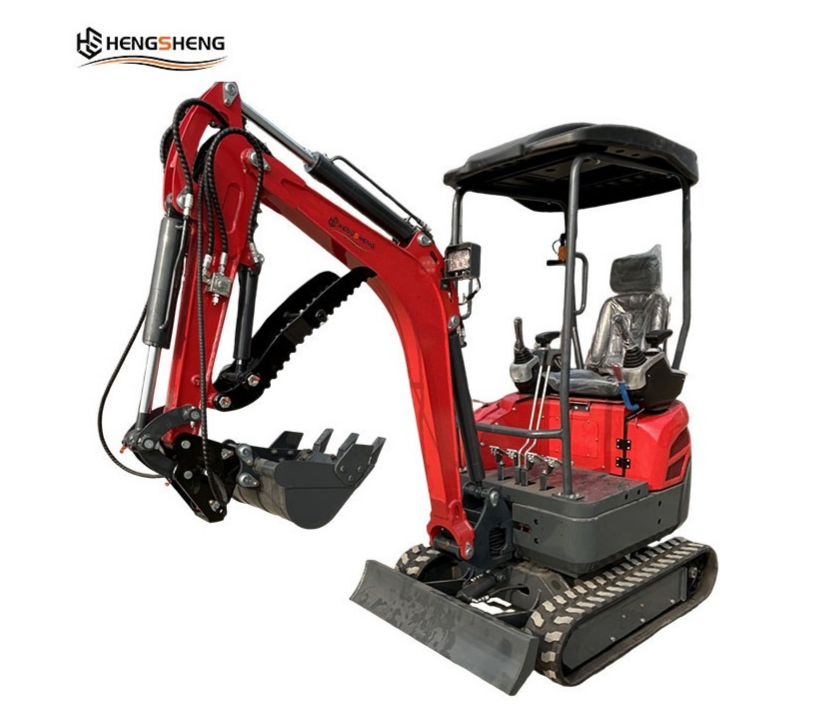
For cut operations, large hydraulic excavators remain the primary engineering construction machinery platform. A machine like the engineering construction machinery designed for heavy-duty excavation can handle hard rock benching, bulk material loading into haul trucks, and slope preparation with a single versatile platform. The ability to swap attachments—from standard buckets to rock breakers and tilt-rotators—makes large excavators central to road earthwork productivity.
Fill operations introduce the need for compaction equipment. Vibratory rollers and tamping foot rollers consolidate placed material to specified density requirements, ensuring long-term road stability. The integration of compaction control technology into modern engineering construction machinery allows real-time monitoring of compaction levels, reducing the risk of soft spots and premature pavement failure. This data-driven approach is becoming standard practice on major highway projects worldwide.
Once earthwork is complete, the road construction sequence shifts to sub-base preparation and asphalt paving, requiring yet another specialized category of engineering construction machinery. Milling machines remove deteriorated or incorrect pavement surfaces, cold planers prepare base courses, and asphalt pavers lay new wearing surfaces at precisely controlled thickness and temperature. Each machine in this chain must be calibrated to deliver dimensional accuracy that meets road engineering specifications.
The performance of paving machinery is directly linked to upstream earthwork quality. If sub-grade preparation has been poorly executed, even the most advanced paving engineering construction machinery cannot compensate for settlement or deflection in the finished surface. This interdependency reinforces the importance of treating machine selection and sequencing as a whole-system discipline rather than choosing each piece of equipment in isolation.
Underground construction represents one of the most technically demanding scenarios for engineering construction machinery. Tunnel boring machines (TBMs) are deployed for major bored tunnel alignments in soft ground, mixed face, and hard rock conditions, with machine selection and configuration driven by the anticipated geological cross-section along the tunnel route. In soft ground conditions—alluvial deposits, clays, and saturated silts—earth pressure balance TBMs maintain face stability by controlling the pressure of excavated material in the cutting chamber.
Supporting the TBM are equally important auxiliary machines. Segment erectors, grout injection systems, and muck transport conveyors are all part of the integrated engineering construction machinery ecosystem within a tunneling operation. The confined nature of tunnel construction means that every piece of equipment must be designed for underground logistics, with attention to ventilation requirements, explosive atmosphere classifications where relevant, and the physical dimensions of the tunnel bore itself.
Not all underground construction uses TBMs. Cut-and-cover methods remain common for shallow metro stations, underpasses, and utility culverts. These scenarios employ traditional surface-operated engineering construction machinery—large excavators, crane-mounted clamshells, and specialized diaphragm wall equipment—to form the retaining structure before the cover slab is placed and surface traffic is reinstated. The construction sequence imposes strict constraints on plant size and cycle times to minimize disruption to road users above.
Diaphragm wall construction is a particularly specialized application requiring hydraulic grabs or rope-suspended clamshell buckets of precise dimensions. The tolerances on panel verticality and joint formation demand engineering construction machinery equipped with real-time inclinometry and depth monitoring. Modern guide wall systems and hydromill equipment have raised the achievable accuracy of diaphragm walls considerably, enabling their use in increasingly sensitive urban environments.
Water-based and marine construction scenarios demand a further specialized dimension of engineering construction machinery. Dredging operations—whether for port deepening, land reclamation, or waterway maintenance—deploy cutter suction dredgers, trailing suction hopper dredgers, and bucket-chain dredgers, each suited to different material types and placement distances. The selection logic mirrors that of land-based excavation but is complicated by water depth, current conditions, and environmental sensitivity of aquatic ecosystems.
Pontoon-mounted excavators are a versatile category of engineering construction machinery frequently used for shallow-water and foreshore work where conventional land-based machines cannot safely operate. By mounting a standard hydraulic excavator on a floating platform, contractors can extend their operational reach into tidal zones, riverbanks, and shallow harbor areas. Stability calculations for the combined platform-machine system are critical to safe and productive operation in these environments.
Creating dry working conditions in waterlogged or marine environments requires the installation of cofferdams and sheet pile walls—tasks that rely on specialized engineering construction machinery including vibratory hammers, hydraulic impact hammers, and silent press systems. The choice between these installation methods depends on subsurface conditions, proximity to sensitive structures, and environmental noise or vibration limits that may be imposed by regulators or neighboring land users.
Once a cofferdam is established, conventional engineering construction machinery can be introduced to dewater the enclosure and carry out foundation or structural work in relatively normal conditions. The quality of the initial sheet pile installation—its verticality, interlock integrity, and penetration depth—is therefore a critical upstream factor that determines the effectiveness and safety of all subsequent machine operations within the enclosed working area.
Demolition is a construction scenario that reverses the typical direction of work, yet it places equally demanding requirements on engineering construction machinery. Selective demolition—retaining certain structural elements while removing others—requires excavators equipped with precision attachments such as hydraulic shears, pulverizers, and multi-processors. These tools allow operators to cut, crush, and separate materials in a controlled sequence that minimizes structural risk and maximizes material recovery for recycling.
High-reach demolition excavators extend the operational envelope of standard machines, allowing the top-down progressive dismantling of tall structures without the need for explosive demolition. The reach and stability characteristics of these specialized forms of engineering construction machinery must be carefully matched to the height and weight of the structure being removed. Outrigger configurations, counterweighting, and boom geometry all contribute to the safe working envelope of high-reach machines.
Before any new construction can begin, site clearance and grubbing operations prepare the ground surface for productive machine work. Bulldozers, mulchers, and tree-clearing attachments on excavators are the primary engineering construction machinery used in this phase. The efficiency of clearance operations has a direct bearing on the construction program, as delays in preparing a clean working platform cascade into all subsequent construction activities.
Stump removal, topsoil stripping, and existing structure clearance are discrete sub-tasks within site preparation, each requiring specific machine configurations. Experienced project planners allocate engineering construction machinery to these tasks with careful attention to soil bearing capacity, which determines whether wheeled or tracked machines should be used to avoid ground damage that could compromise subsequent earthwork compaction. The condition of the cleared and prepared platform is one of the most underappreciated quality factors in overall project delivery.
The key factors include site geometry and access constraints, subsurface soil or rock conditions, required production rates, environmental and regulatory limitations, and the specific structural outcomes needed. Matching engineering construction machinery to these factors requires a combination of geotechnical data, engineering judgment, and practical experience with machine performance in similar conditions.
Machine selection has a direct and significant impact on project cost through its influence on cycle times, fuel consumption, maintenance requirements, and the number of machine hours required to complete specific work packages. Deploying oversized or mismatched engineering construction machinery results in underutilization and inflated operating costs, while undersized machines create program delays that drive up indirect project costs. Optimized selection improves both direct and indirect cost performance simultaneously.
Many categories of engineering construction machinery, particularly hydraulic excavators, are highly versatile and can be adapted to multiple scenarios through attachment changes and configuration adjustments. However, there are genuine limits to this versatility, and specialized scenarios such as TBM tunneling, marine dredging, or high-reach demolition require purpose-built machine categories that cannot be substituted by general-purpose equipment without significant performance or safety penalties.
Technology integration is transforming engineering construction machinery across all scenarios. Machine control systems, GPS-based grade guidance, real-time telematics, and remote operation capabilities are being incorporated into equipment ranging from earthmoving excavators to tunnel boring machines. These advances improve accuracy, reduce rework, enhance operator safety in hazardous environments, and provide project managers with data-driven visibility into machine performance that was previously unavailable on construction sites.

 EN
EN