05-20-2026
Modern construction sites are marvels of coordinated effort, precise planning, and technological power. At the heart of every successful project — whether it involves erecting a skyscraper, tunneling through bedrock, or grading terrain for a new highway — is engineering construction machinery. Without these purpose-built machines, the scope, speed, and safety standards that today's industry demands would simply be unachievable. The role of engineering construction machinery has evolved from simple mechanical assistance to a strategic cornerstone of project execution, workforce safety, and economic efficiency.
The demand for high-performance engineering construction machinery continues to surge globally as infrastructure investment accelerates. Governments, private developers, and engineering firms alike are scaling up operations, pushing project timelines tighter, and demanding higher output from smaller crews. Understanding why engineering construction machinery is not merely helpful but genuinely essential requires a close look at the operational, economic, and safety dimensions it addresses across modern job sites. This article explores those dimensions in detail, providing B2B decision-makers and project managers with clear, practical insight into the indispensable value of these machines.
Contemporary construction projects operate on timelines that would have been considered impossible just a few decades ago. A large commercial development may need thousands of cubic meters of earth excavated, graded, and prepared within weeks. Engineering construction machinery makes this feasible by dramatically multiplying the productive output of each worker on site. A single large excavator, for example, can accomplish in one shift what would require dozens of workers several days to complete manually.
Beyond raw speed, the precision of modern engineering construction machinery allows teams to execute complex earthmoving, foundation work, and structural tasks with accuracy that manual labor simply cannot replicate consistently. GPS-integrated grading systems, load-sensing hydraulics, and automated depth controls all contribute to more reliable outcomes, fewer errors, and reduced rework — all of which directly affect project profitability and timeline adherence.
When project managers calculate resource allocation, the deployment of engineering construction machinery is almost always the most cost-effective solution for large-scale tasks. The machinery not only accelerates individual tasks but also enables parallel workflows — different machines handling different site zones simultaneously — which is essential for maintaining momentum on large infrastructure or civil engineering contracts.
Modern job sites are not uniform. They range from dense urban environments with tight clearances to remote terrain with challenging ground conditions, extreme weather, or limited access. Engineering construction machinery is engineered specifically to perform across this spectrum. Compact excavators navigate narrow urban corridors; heavy-duty crawler machines conquer steep embankments and soft soil; specialized attachments transform a single base machine into a breaker, a grader, a clamshell, or a pile driver.
This versatility is one of the core reasons why engineering construction machinery is considered essential rather than supplementary. A project team that invests in the right equipment portfolio can adapt to evolving site conditions without halting work or waiting for specialized subcontractors. The modular design philosophy behind today's machines means that a well-chosen piece of engineering construction machinery can serve multiple roles throughout a project's life cycle, maximizing asset utilization and reducing overall equipment costs.
Moreover, advances in machine design have improved performance in adverse conditions. Reinforced undercarriages, sealed hydraulic systems, and climate-controlled cabs ensure that engineering construction machinery continues to deliver reliable output even in extreme heat, cold, or wet conditions — circumstances that would significantly impair human productivity and safety.
Construction consistently ranks among the most hazardous industries in the world. Falls, struck-by incidents, collapses, and equipment-related injuries account for a significant share of workplace fatalities each year. One of the most powerful reasons why engineering construction machinery is essential is its ability to remove workers from the most dangerous parts of a site entirely. Remote-controlled demolition robots, long-reach excavators, and automated compaction systems all allow operators to perform high-risk tasks from a safe distance or a protected cab.
When trenching or excavation is required, for instance, deploying the right engineering construction machinery means workers are not manually digging in unstable soil conditions that could collapse without warning. The machine performs the hazardous physical work while the operator monitors from a stable, shielded position. This fundamental shift in risk distribution is one of the strongest safety arguments for investing in quality engineering construction machinery on every site.
Safety regulations in many markets now mandate the use of engineering construction machinery for tasks above certain load, depth, or height thresholds. Compliance with these regulations is not just a legal obligation — it is a reflection of industry best practices that protect both workers and the long-term reputation of contracting firms. Companies that systematically deploy appropriate machinery demonstrate a safety culture that reduces incident rates and associated liability.
Today's engineering construction machinery incorporates safety technology at the hardware and software level. Proximity warning systems alert operators when personnel or obstacles enter danger zones. Automatic load-limiting controls prevent machines from being overloaded in ways that could cause tipping or structural failure. Backup cameras, 360-degree visibility systems, and real-time monitoring dashboards reduce the likelihood of accidental contact incidents in busy site environments.
Anti-fatigue monitoring is an emerging area where engineering construction machinery is making a significant difference. Sensors that detect operator drowsiness or inattention can trigger alerts or even pause machine operation, addressing one of the leading causes of equipment-related accidents on long-shift projects. These onboard systems represent a meaningful evolution in how machinery itself acts as a safety partner, rather than simply a tool.
For procurement and site management teams, understanding and specifying these built-in safety features is as important as evaluating lift capacity or fuel efficiency. A machine's safety specification is a direct investment in workforce wellbeing, regulatory compliance, and the project's overall risk profile — all of which ultimately affect the bottom line.
Labor is consistently one of the largest cost components in construction. Engineering construction machinery allows contracting firms to achieve higher output levels with leaner crews, fundamentally reshaping the economics of project delivery. A well-equipped site can accomplish the same scope of work as a much larger manual team at a fraction of the labor cost — and often in significantly less time. This productivity advantage translates directly into better margin performance and more competitive bidding positions.
The cost-per-unit-of-work metric improves dramatically when the right engineering construction machinery is deployed correctly. Whether measured in cubic meters excavated, square meters compacted, or linear meters of pipe laid, machinery consistently delivers lower unit costs than manual alternatives at meaningful scale. This is why virtually every serious contractor in civil engineering, infrastructure, and commercial construction treats machinery investment as a core business strategy rather than a discretionary expense.
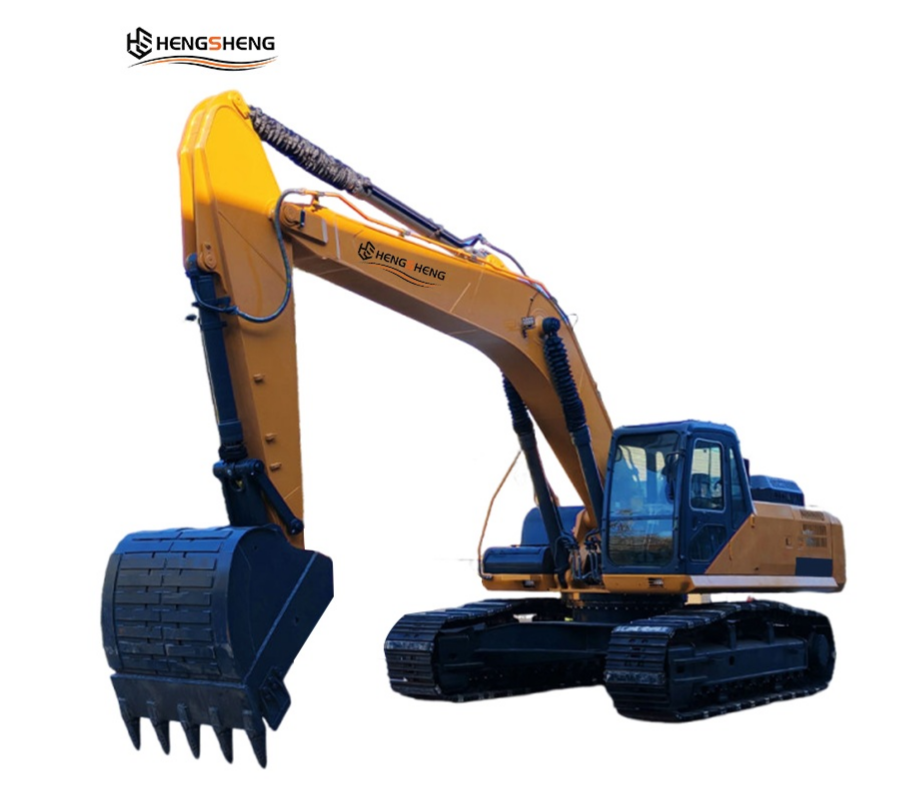
Modern equipment management platforms further enhance this economic advantage. Telematics systems track fuel consumption, machine utilization, idle time, and maintenance intervals in real time. Fleet managers using these tools with their engineering construction machinery can make data-driven decisions that reduce operating costs, extend machine life, and prevent costly unplanned downtime — all of which improve overall project economics.
High-quality engineering construction machinery represents a significant capital investment, but one that generates long-term returns through multiple project cycles. A well-maintained machine retains residual value, can be redeployed across different projects, and may be refurbished or upgraded to extend its operational life. The total cost of ownership calculation for engineering construction machinery typically yields a favorable return when compared to alternatives such as excessive manual labor or reliance on subcontractor equipment at premium rates.
For companies considering fleet expansion, products like the engineering construction machinery offered through specialized manufacturers represent the intersection of performance, durability, and long-term economic value. Selecting machinery with robust after-sales support, readily available spare parts, and strong resale markets ensures that the investment continues to generate value well beyond the initial project.
Depreciation planning, maintenance scheduling, and resale strategy are all part of a sound asset management approach for engineering construction machinery fleets. Companies that manage their equipment portfolios professionally consistently outperform competitors who treat machinery as a short-term cost item, because they benefit from lower lifecycle costs and higher operational readiness rates across all their projects.
The construction industry is undergoing a profound digital transformation, and engineering construction machinery is at the center of it. Machines are no longer purely mechanical — they are increasingly connected, sensor-rich platforms that generate operational data, communicate with site management systems, and in some cases, execute tasks with semi-autonomous logic. This shift is raising performance standards across the entire industry and widening the capability gap between projects that deploy advanced machinery and those that do not.
Grade control systems integrated into engineering construction machinery allow operators to achieve sub-centimeter accuracy in earthmoving tasks, reducing the need for manual survey checks and rework. Machine control software connected to BIM (Building Information Modeling) data enables real-time comparison between design intent and actual site conditions, flagging deviations before they become expensive problems. These capabilities represent a fundamental change in how construction quality is managed and assured.
As connectivity improves and IoT platforms mature, the data generated by engineering construction machinery will become an increasingly valuable resource for site planning, predictive maintenance, and project reporting. Forward-thinking contractors are already building data strategies around their machinery fleets, recognizing that operational intelligence derived from machines is a competitive differentiator in winning and executing complex projects.
Environmental performance has become a significant procurement and regulatory factor for engineering construction machinery. Stricter emissions regulations in major markets have driven manufacturers to develop machines with Tier 4 Final and Stage V-compliant engines, hybrid powertrains, and electrified alternatives. For contractors operating in environmentally sensitive areas or jurisdictions with strict air quality requirements, selecting compliant machinery is not optional — it is a condition of site access and contract compliance.
Beyond regulatory compliance, the fuel efficiency of modern engineering construction machinery has a direct and measurable impact on project operating costs. Machines that consume less fuel per hour of productive work reduce both direct fuel expenditure and the carbon footprint of the project. As clients — particularly in the public and infrastructure sectors — increasingly incorporate sustainability metrics into tender evaluations, the environmental specifications of a contractor's machinery fleet become a commercial consideration as well as an ethical one.
The shift toward electric and hybrid engineering construction machinery is accelerating, with battery-electric compact machines already commercially available and larger electric excavators entering the market. Companies that begin transitioning their fleets toward lower-emission machinery now are positioning themselves for the regulatory and commercial environment that is clearly emerging across global construction markets.
Large-scale civil engineering projects including road construction, bridge building, tunneling, dam construction, and urban infrastructure development rely most intensively on engineering construction machinery. However, commercial and industrial building construction, mining site preparation, and land development also depend heavily on machinery to meet performance and timeline requirements.
Engineering construction machinery accelerates timelines by multiplying the productive output of each worker, enabling parallel workflows across different site areas, and reducing the time required for high-volume tasks like excavation, grading, and compaction. Machines operate in conditions and for durations that would be impractical for manual labor, allowing projects to maintain progress through adverse conditions and tight schedules.
Procurement teams should prioritize performance specifications relative to project requirements, total cost of ownership including fuel and maintenance costs, compliance with local emissions and safety regulations, availability of after-sales support and spare parts, and the resale value of the asset. Evaluating engineering construction machinery on a lifecycle cost basis rather than purchase price alone consistently produces better long-term outcomes.
Yes. While the scale of machinery deployment varies, engineering construction machinery provides efficiency, safety, and quality advantages even on mid-scale projects. Compact and versatile machines are specifically designed for smaller sites where space and access are limited, ensuring that the core benefits of mechanization — speed, safety, and precision — are accessible regardless of project scale.

 EN
EN