05-25-2026
Large-scale infrastructure development is the backbone of modern economies, enabling transportation networks, urban expansion, energy distribution, and public utilities to function at scale. At the heart of every major project — whether a highway cutting through mountainous terrain, a bridge spanning a wide river, or a metropolitan tunnel system — sits a fleet of engineering construction machinery doing the work that human labor alone could never accomplish within realistic timeframes or budgets. Understanding how this machinery integrates into infrastructure workflows is essential for project planners, civil engineers, procurement managers, and construction contractors who need to make high-stakes decisions under demanding conditions.
The relationship between engineering construction machinery and infrastructure outcomes is not incidental — it is structural. The right equipment deployed at the right phase of a project reduces timelines, controls costs, improves worker safety, and ultimately determines whether a development meets its engineering specifications. This article explores the specific mechanisms through which engineering construction machinery enables large-scale infrastructure projects to move from blueprints to reality, covering ground preparation, material handling, structural work, and the decision logic behind equipment selection.
Before any infrastructure structure can rise, the ground beneath it must be transformed. Engineering construction machinery takes raw, often unstable terrain and converts it into a workable foundation. Excavators, bulldozers, compactors, and graders systematically remove obstacles, level surfaces, and achieve the bearing capacity specifications required by structural engineers. On large-scale projects, this phase alone can span months and involve hundreds of machine-hours per day.
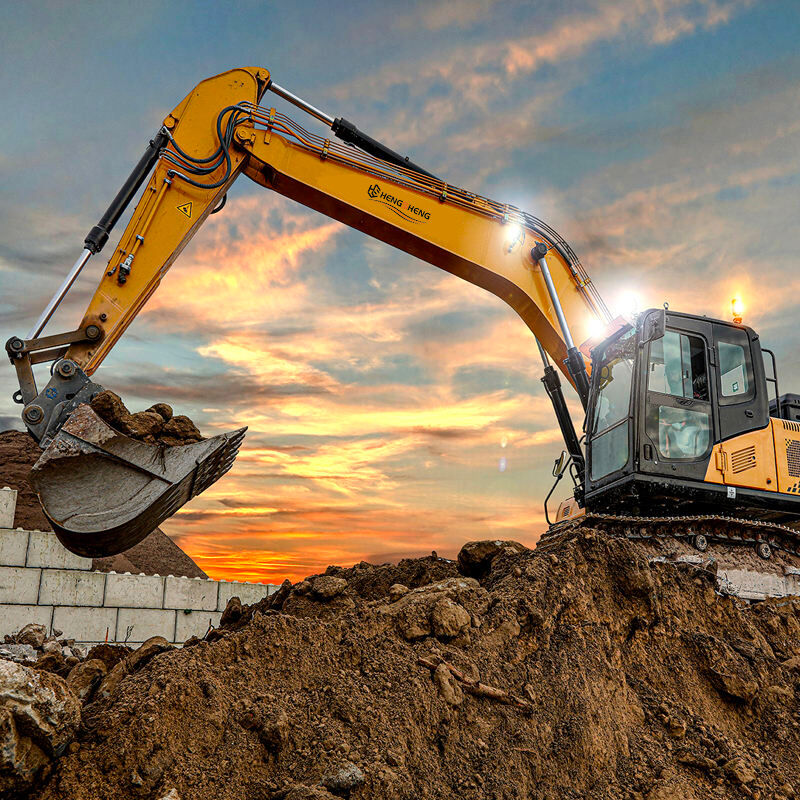
Excavators occupy a particularly central position during site preparation. A large excavator from a capable line of engineering construction machinery can remove tens of thousands of cubic meters of earth per week, making what would be a years-long manual operation achievable within a defined project schedule. The precision of hydraulic controls in modern equipment means that operators can work to exact grade tolerances, which directly affects downstream structural outcomes.
Ground compaction is another critical preparatory step that engineering construction machinery handles systematically. Vibratory compactors and roller machines apply controlled force to achieve soil density targets, preventing future settlement that could compromise road surfaces, foundation integrity, or pipeline alignments. These are not optional finishing tasks — they are engineering prerequisites that machinery completes with measurable accuracy.
Infrastructure development at a large scale — think major dam construction, airport runways, or intercity expressways — demands earthmoving volumes that no light or mid-range equipment class can reasonably accommodate. This is where high-capacity engineering construction machinery becomes a determining factor in whether a project is feasible on schedule. Large excavators, articulated dump trucks, and scrapers work in coordinated cycles to move millions of cubic meters of material across defined timelines.
The efficiency of earthmoving cycles directly influences project cost structures. When engineering construction machinery is correctly sized to the task, cycle times are minimized, fuel consumption per cubic meter of moved earth is optimized, and the number of machines required for a given output is rational. Poor equipment sizing — either too small or overpowered for the application — creates inefficiencies that compound across the life of a project.
Modern engineering construction machinery increasingly integrates GPS-based grade control systems that allow operators to cut to design elevation automatically, reducing re-work, survey time, and over-excavation. On large infrastructure projects, this technology translates into measurable cost savings and accelerated milestone achievement.
Structural infrastructure requires deep, load-bearing foundations that can only be achieved using specialized engineering construction machinery. Piling rigs drill or drive foundation elements to depths that stabilize structures against load, seismic activity, and soil movement. Cranes position prefabricated structural elements with millimeter-level precision to maintain design tolerances. Without these machines, the structural integrity of major infrastructure would be impossible to guarantee.
In tunnel construction, engineering construction machinery includes tunnel boring machines that advance through soil and rock while simultaneously lining the tunnel walls. These machines operate continuously in enclosed underground environments, performing multiple functions — excavation, material removal, and structural lining — in a single coordinated process. The scale and complexity of this machinery reflects the demands of the infrastructure it enables.
Bridge construction depends on crane systems, concrete pumping equipment, and formwork machinery that together allow engineers to place structural elements at height, over water, or across difficult terrain. Each category of engineering construction machinery used in these contexts must meet rigorous load, reach, and stability specifications, which is why equipment selection and engineering review are inseparable processes on major infrastructure contracts.
Road and highway infrastructure development consumes enormous volumes of concrete and asphalt, and the quality of placement directly determines pavement longevity and performance. Engineering construction machinery for these applications includes slip-form pavers, asphalt finishers, and concrete mixing plants that operate continuously to meet the pour schedules required by large contracts. These machines produce consistent material density and surface regularity that manual methods cannot replicate at infrastructure scale.
Asphalt pavers and compaction rollers work in coordinated sequences to achieve layer thickness and compaction levels specified by highway engineers. The performance of this engineering construction machinery is directly reflected in the long-term durability of road surfaces, meaning that equipment quality and operator competence have lasting infrastructure consequences that extend well beyond the construction phase.
Concrete pump trucks and batch plants serve a similar function on vertical infrastructure projects, ensuring that concrete reaches elevated or remote pour locations without quality degradation. Maintaining workability, temperature, and mix consistency across large pours requires machinery that can control these variables in real time, particularly in extreme climates.
One of the most consequential decisions in infrastructure project planning is the selection of engineering construction machinery appropriate to the scale and nature of the work. Undersized equipment produces bottlenecks that delay the critical path. Oversized equipment drives up mobilization, fuel, and operating costs without proportional output gains. The goal is always to match the machine's rated capacity to the actual demand profile of the specific work package.
For excavation-heavy infrastructure projects — large dams, deep cut highways, port terminal reclamation — large hydraulic excavators with bucket capacities in the 3 to 5 cubic meter range are often the appropriate tool. These machines can process the volume required to keep haul trucks loaded and cycling efficiently, maintaining the earthmoving productivity chain that drives project schedule compliance.
In contrast, confined urban infrastructure projects such as utility trenching, metro station excavation, or dense residential development require engineering construction machinery with a smaller footprint but still capable of performing precision work within tight tolerances. The selection logic here shifts from raw capacity to maneuverability, reduced ground pressure, and low-vibration operation near existing structures.
On projects measured in years rather than months, the reliability of engineering construction machinery becomes as important as its technical specification. Machine downtime on a large infrastructure contract does not just delay one task — it disrupts the entire production sequence, affecting concrete pour schedules, structural erection windows, and contract milestone dates. Reliability data, parts availability, and service network density are therefore primary procurement criteria, not secondary concerns.
Total cost of ownership analysis is standard practice for sophisticated buyers of engineering construction machinery in the infrastructure sector. This analysis accounts for acquisition cost, fuel consumption per operating hour, scheduled maintenance intervals, expected parts costs, and residual value at project end. Equipment that appears cost-effective based on purchase price alone may perform poorly on total cost metrics when fuel efficiency, service requirements, and reliability history are factored in.
Preventive maintenance programs enabled by telematics and machine monitoring systems allow fleet managers on large infrastructure projects to track the health of each unit of engineering construction machinery in real time. Alerts for oil condition, filter status, engine load, and hydraulic pressure deviations allow maintenance teams to intervene before failures occur, sustaining the uninterrupted machine availability that large-scale projects demand.
Modern infrastructure projects are governed by environmental regulations that directly constrain the type of engineering construction machinery that may be deployed. Emissions standards such as Stage V in Europe and Tier 4 Final in North America mandate that construction equipment engines meet strict limits on particulate matter and nitrogen oxide output. Compliance is not optional — non-compliant machines cannot legally operate on many infrastructure contracts, particularly in urban environments or ecologically sensitive areas.
Beyond regulatory compliance, the environmental performance of engineering construction machinery has become a procurement differentiator for public infrastructure clients. Government agencies and international development banks increasingly score contractors on fleet emissions profiles, fuel efficiency standards, and the use of alternative-energy equipment such as electric or hybrid models. Contractors with modern, compliant fleets gain competitive advantages in bid evaluations that include environmental scoring criteria.
Noise and vibration management is equally relevant in urban infrastructure environments. Advanced engineering construction machinery designs incorporate sound-dampened cabs, vibration-isolated undercarriages, and optimized hydraulic systems that reduce acoustic and ground-borne impacts on adjacent communities. This capability is often a contractual requirement in densely populated areas and directly affects a contractor's ability to maintain operating windows.
Infrastructure construction consistently ranks among the highest-risk industrial activities, and engineering construction machinery design has evolved significantly to address this risk profile. Modern cab designs incorporate ROPS (rollover protective structures), FOPS (falling object protective structures), and operator presence detection systems that prevent machine motion when the operator is not correctly positioned. These features are now standard on construction-grade equipment and are required on most regulated job sites.
Ergonomic improvements in engineering construction machinery also contribute directly to productivity. Operators who experience less fatigue due to well-designed seat systems, intuitive joystick layouts, and improved cab climate control maintain higher precision and faster cycle times throughout long shifts. On infrastructure projects where machine utilization targets may reach 10 or more hours per day, ergonomic design has measurable production implications, not just welfare ones.
Proximity warning systems, camera-based rear-view monitoring, and swing alarm technologies are increasingly standard on large engineering construction machinery, reducing collision risks in the crowded, multi-machine environments typical of large infrastructure sites. These safety systems are now commonly specified as mandatory in project health and safety plans, making them a practical equipment selection criterion rather than an optional upgrade.
The most critical categories of engineering construction machinery for large infrastructure include large hydraulic excavators for earthmoving, piling rigs for foundation installation, cranes for structural element placement, asphalt and concrete pavers for road construction, and compaction equipment for soil and pavement finishing. The relative importance of each category depends on the specific nature of the infrastructure being built — earthwork-intensive projects prioritize excavators and dump trucks, while vertical construction emphasizes cranes and concrete pumping equipment.
Engineering construction machinery is one of the primary determinants of project timeline. The production rates of machines — measured in cubic meters excavated, meters of road paved, or piles installed per shift — directly set the achievable pace of construction. When equipment is correctly selected, well-maintained, and deployed efficiently, projects can meet or exceed milestone targets. Conversely, equipment breakdowns, undersizing, or poor utilization management are among the leading causes of construction schedule delays on large infrastructure contracts.
Procurement teams evaluating engineering construction machinery should assess machine capacity against project volume requirements, reliability data and manufacturer support infrastructure, fuel and maintenance cost profiles across the expected operating period, emissions compliance with applicable regulations, available telematics and diagnostic capabilities, and operator ergonomics and safety features. A rigorous total cost of ownership model that incorporates all these dimensions provides a more accurate basis for decision-making than purchase price alone.
Technology is reshaping engineering construction machinery across multiple dimensions. GPS-based machine control systems now allow excavators and graders to cut precisely to design grade automatically, reducing rework and survey costs. Telematics platforms provide fleet managers with real-time health monitoring, location tracking, and utilization data for every machine on a project. Electrification is beginning to enter the construction equipment sector, with electric and hybrid machines offering reduced emissions and lower fuel costs. Automation and remote operation technologies are also advancing, with semi-autonomous machines beginning to appear in controlled construction environments, extending the capability of engineering construction machinery on large infrastructure sites.

 EN
EN